
How do you heat and cool a geodesic dome?
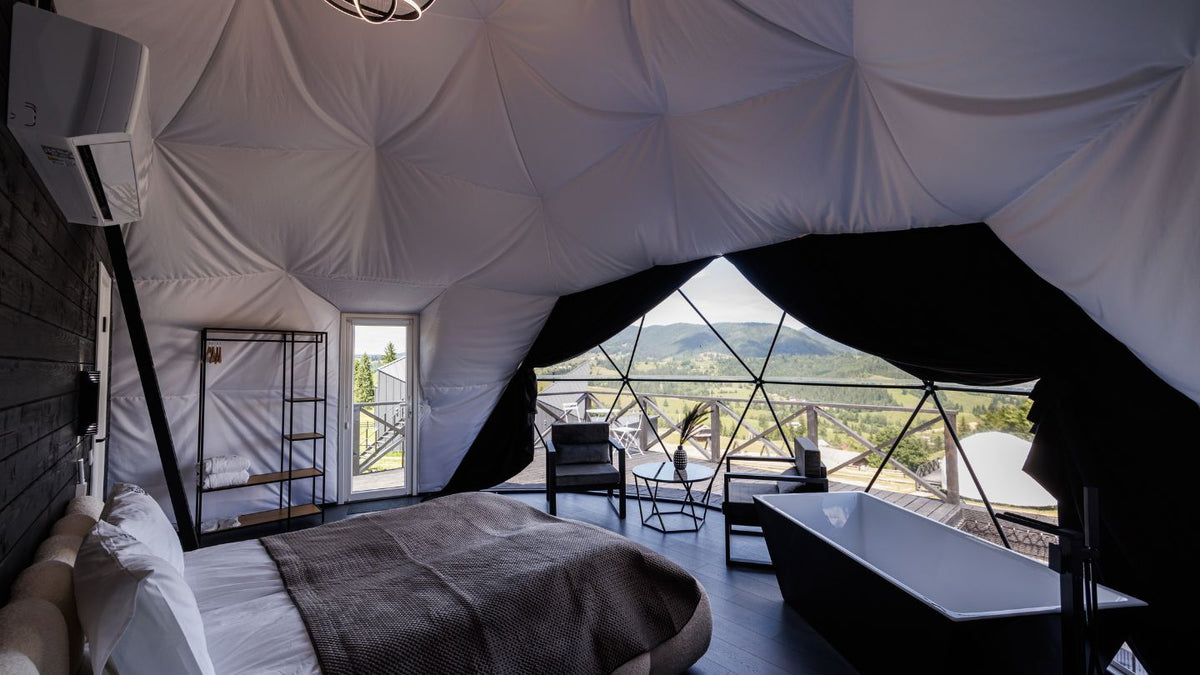
Heating and cooling a geodesic dome is simpler than heating a house of the same size. One right-sized HVAC unit, a minimum of 24,000 BTU on a Harmony dome, covers both the winter and the summer side, and the shape itself does a surprising amount of the work.
A dome has less outside surface than a boxy building with the same floor space, so there's less skin for heat to escape through. The curved ceiling keeps air moving in a continuous loop instead of letting it pool in a high corner. You start ahead of a conventional build. The rest is choosing the pieces well, and there are only four of them.
What actually heats and cools a geodesic dome
The HVAC unit. A single unit handles heating and cooling both, which keeps the mechanical side of a dome refreshingly short. Harmony specs a minimum of 24,000 BTU. How to think about it: size to your dome and your climate with a little headroom, since a slightly larger unit cruising is quieter and cheaper to run than a small one working flat out. A full dome typically draws under 50 amp service, so you are not rebuilding your property's electrical to run one.
Insulation. This is the piece that decides how hard the unit ever has to work. Three tiers cover the range. A foil liner is the reflective entry option, right for mild climates and seasonal use. A multi-layer insulation system sits behind the liner with the thickness dialed to your climate zone and the R-value your county asks for, which is what year-round living wants. Closed-cell spray foam adds continuous air sealing for very cold or very humid places. How to think about it: count the months you want the dome comfortable, insulate to that number, and the heating and cooling choice becomes easy.
Ventilation. Fresh air keeps a dome pleasant and keeps moisture moving. An air recuperator exchanges air while holding on to the heat you already paid for, which is the four-season answer. A solar fan is passive and silent, well suited to warm climates. A ventilation screen gives basic airflow with insect protection for simple seasonal setups.
Shade and glazing. A blackout membrane and blackout curtains cut solar gain on the sunny side, which matters more than people expect in July. The Signature glass door and double-pane windows hold temperature better than the standard clear PVC panorama window, so they earn their place on anything you live in or rent.
How to heat and cool a dome in your climate
Mild and seasonal. A foil liner, a solar fan or vent screen, and a modest HVAC unit for the edges of the season. Spend the saving on the deck and the view.
Cold winters. Multi-layer insulation, an air recuperator, and the full 24,000 BTU unit. Our covers are rated from -40 to 70 C, so the membrane is not the limiting factor. The insulation and the air exchange are what carry a February night.
Hot and humid. Insulate for the heat as much as the cold, add blackout to keep the sun off the shell, and lean on ventilation. Spray foam is worth the contractor visit where humidity runs high all year.
Comfort and condensation, handled together
Condensation gets talked about like a flaw in domes. It is really just physics on any surface where warm inside air meets a cold outer skin, and the same three choices that keep a dome comfortable also keep it dry: the liner and insulation shrink the temperature gap, and ventilation carries the moisture out. Get the pair right and the question stops coming up.
Where the heating and cooling actually lives
On a dome finished for full-time living or premium rental, the mechanicals do not have to be scattered around the space. They can sit in one place: the modular interior unit that carries the HVAC, electrical panel, kitchen and bathroom arrives utility-ready, so the living area opens up around it and you connect power, water, and waste in one spot. It fits Dome 6 and larger.
Tell us your site and how many months you want to use it, and we will size the insulation, ventilation, and HVAC to match, then document the setup for your building department.
How many BTU do you need for a geodesic dome?
Harmony specs a minimum of 24,000 BTU for heating and cooling, which covers most dome sizes comfortably. A 415 sq ft Dome 7 in a cold climate and a smaller dome in a mild one land in different places within that, so we size it to your climate zone and how you plan to use the space.
Are geodesic domes expensive to heat?
Generally less than a rectangular building of the same floor area. Less exterior surface means less heat loss, and the curved ceiling keeps warm air circulating rather than stratifying. Insulation tier is the biggest lever on your monthly bill.
Can one unit heat and cool the whole dome?
Yes on the sizes we build. The open interior and continuous airflow let a single properly sized unit condition the whole space, which is one of the quiet advantages of the shape.
Ready to put a number on it?
Build and price your dome