
How Do You Insulate a Geodesic Dome?
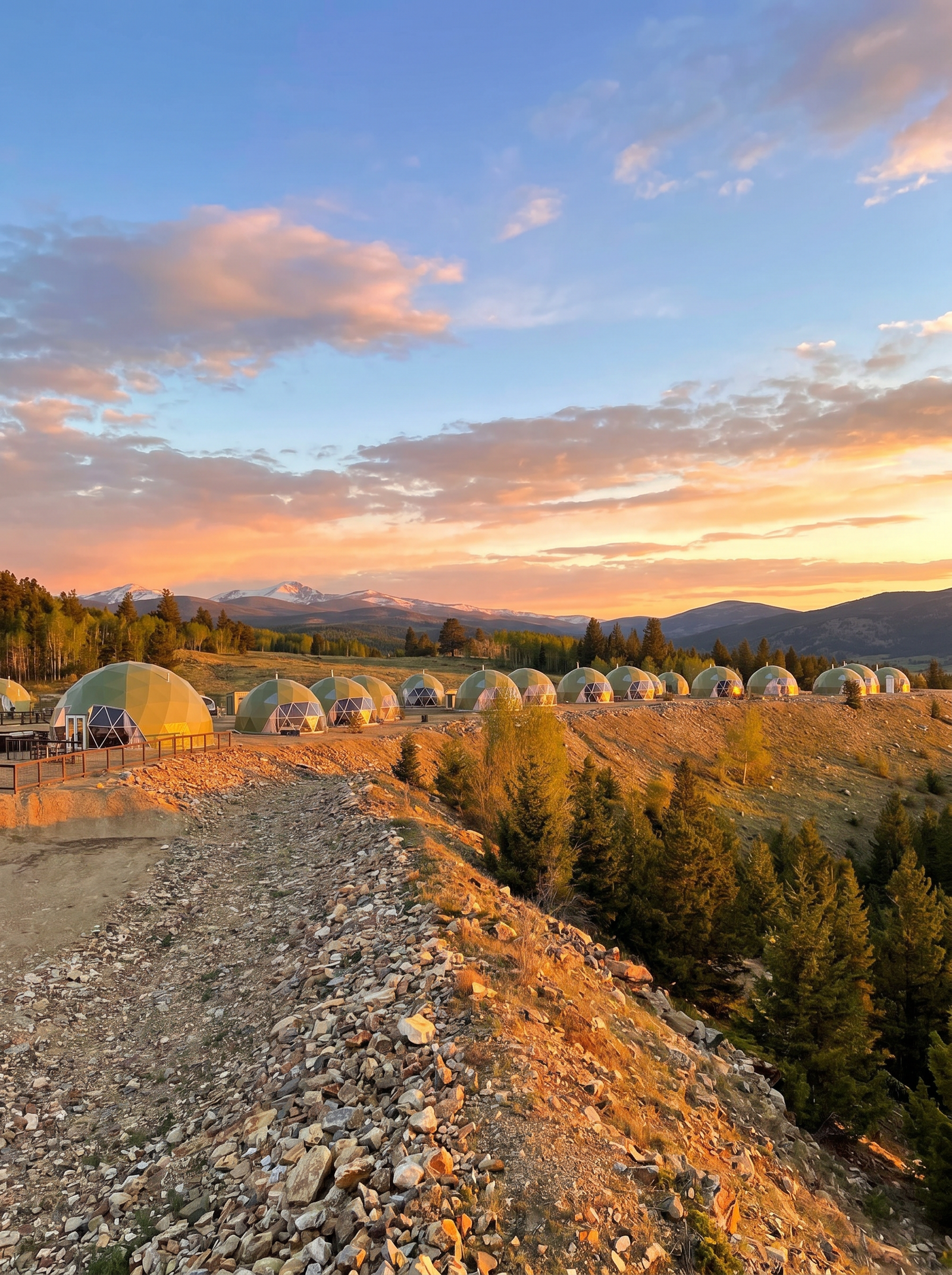
Here is the reassuring part: keeping a dome comfortable is not complicated, it just comes in layers. You insulate a geodesic dome by adding an insulated layer inside the shell, and you have three levels to choose from, depending on how cold your winters get and how you plan to use the space: a reflective foil liner for mild, seasonal use, a multi-layer synthetic system for year-round living, and spray foam for genuinely extreme climates.
It helps to picture the wall as a team of layers, each with one job. The outer architectural PVC membrane takes the wind, snow, and sun. The insulation behind it holds your temperature steady. The inner liner finishes the surface and keeps moisture in check. When those three work together, the inside stays calm and dry while the weather does whatever it likes outside. That layering is also why a well-insulated dome looks fuller and more finished from the outside, because the added depth gives the shell real body.
Which dome insulation is right for you?
Think of it as picking the level that matches your climate, your season, and your local code.
Foil liner. A reflective layer that trims heat loss, keeps condensation down, and lifts energy efficiency. It runs roughly $1,375 to $2,650 depending on the size of your dome. How to think about it: this is your pick for mild climates and seasonal glamping, where you want a comfortable, dry space without building a full envelope.
Multi-layer insulation system. Synthetic insulation layers set behind the liner to reach the higher R-values that year-round living needs, with thickness dialed to your climate and your code. How to think about it: choose this the moment the dome becomes a home or a winter rental. It is the difference between comfortable most of the year and comfortable every night.
Spray foam. Closed-cell foam that seals the whole envelope for the harshest cold or humidity. It goes on at install, so a contractor sprays it on site, and we guide the approach or handle it directly when we run the build. How to think about it: reach for it in genuinely extreme climates or code-heavy counties, where sealing every gap is what keeps the heat in and the moisture out.
What about condensation in a geodesic dome?
Condensation is the thing people tend to worry about, and it is worth understanding rather than fearing. It forms when warm, damp indoor air meets a cold surface. Insulation solves most of it by keeping that inner surface warm, and the liner manages the rest. Add a little air movement and it stops being a concern at all. Harmony's air recuperator brings fresh air in while holding your heat, a solar fan handles warm-weather airflow, a vent screen gives simple passive circulation, and an HVAC unit takes full control. Match the airflow to your climate and a dry, steady interior is the normal result.
Quick guide:
Seasonal, mild climate → foil liner
Year-round home or rental → multi-layer system
Extreme cold or humidity → add spray foam
Any setup → pair insulation with ventilation for condensation control
So how much insulation do you actually need? Count the months you want to use the dome and build to that, and see how it factors into the total dome cost. Because we reach a target R-value by adding layers, one model can be tuned for a warm coast or a snow-loaded mountain county and still meet local code. If you want to see the sizes, framing, and finishes side by side, our geodesic domes page lays them out, and we will help you match the insulation to your site.
Underneath it all is a shell built to last: a powder-coated steel frame under an architectural PVC membrane, engineered for 20-plus years. Insulate it well once, and the comfort stays for the long run.
Can you insulate a geodesic dome for year-round living?
Yes. A multi-layer insulation system, or spray foam in extreme climates, gives the shell the R-value it needs to stay comfortable through summer heat and winter cold, which is why insulated domes work as full-time homes and all-season rentals.
Does insulating a dome stop condensation?
It is the main fix. Insulation keeps the inner surface warm enough that moisture is far less likely to form, and pairing it with the interior liner and a little steady ventilation keeps the space dry.
What R-value can a Harmony dome reach?
There is no single fixed number. We meet a specific R-value by adding insulation layers and adjusting thickness, so the dome can be built to perform in very hot or very cold climates and to satisfy your local code.
Ready to put a number on it?
Build and price your dome