
How long does a geodesic dome last?
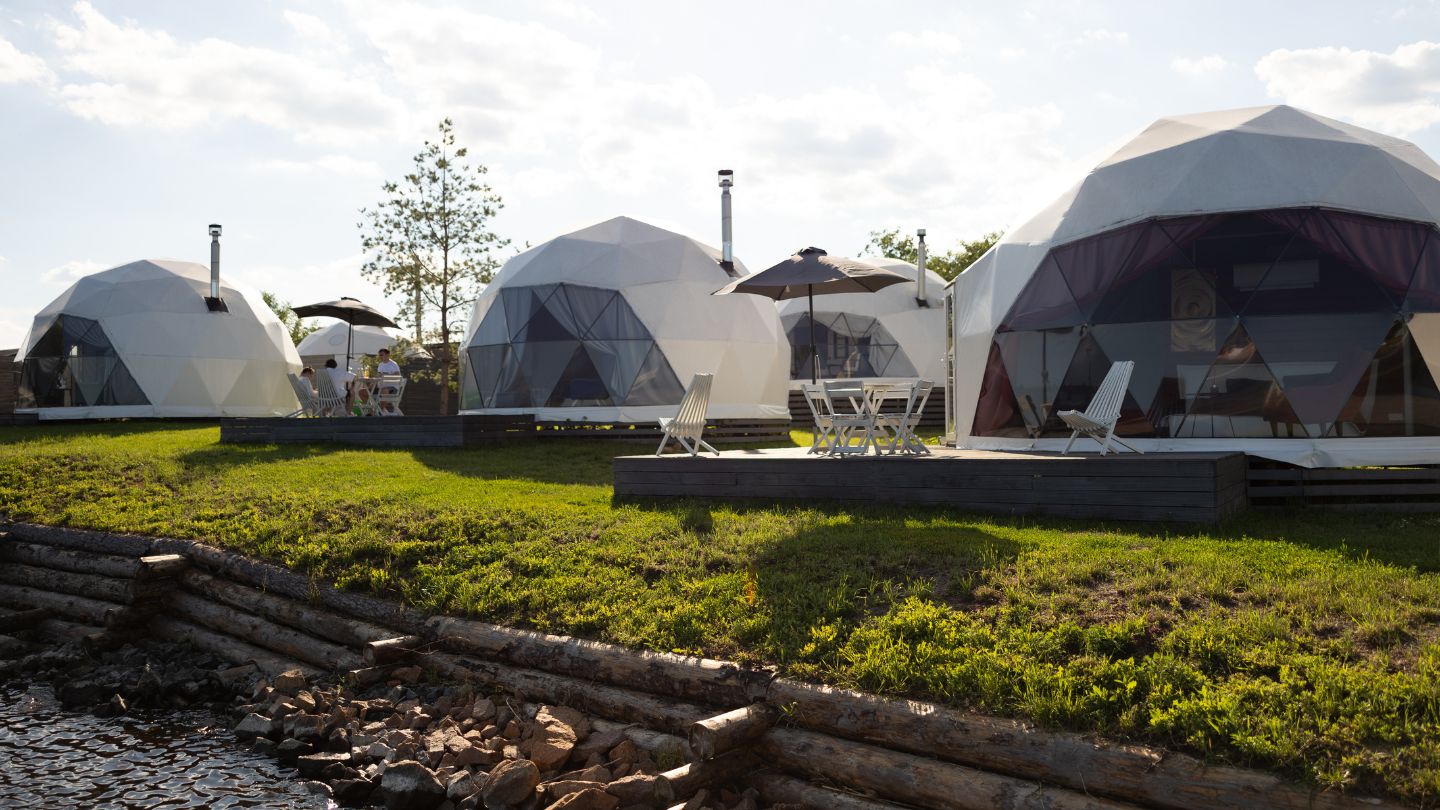
How long does a geodesic dome last? A well-built one lasts 20-plus years, and with simple care the structure often keeps going well beyond that. Two parts set the timeline, the frame and the cover, and both are built to run a long time.
That is the short answer. The longer answer is reassuring, because dome lifespan comes down to the materials underneath and a little upkeep you can do yourself. Here is how it actually plays out.
What makes a geodesic dome last so long
The frame is the backbone, and ours is powder-coated steel. Steel gives the dome its strength, and the powder coating seals the surface so the frame keeps its finish season after season. That pairing is why a geodesic dome shrugs off weather that would tire out lighter structures. The shape helps too. A dome spreads load across its whole geometry, so wind and snow ride through the entire frame instead of pressing on a few weak points.
On top sits the cover, a Belgian architectural PVC membrane at 650 g/sqm. It is made to face sun, rain, and cold for years while staying taut and clean. Rated wind resistance runs up to 250 mph depending on the framing you choose, and every configuration is backed by a structural study, so the number on the page reflects real engineering for your setup.
How long the frame and cover really hold up
Think of the dome as two clocks running at different speeds. The steel frame is the slow one. Kept clean and anchored properly, it stays sound for decades and forms the 20-plus year backbone of the structure. The cover is the faster clock, and even so it is a long runner. Architectural PVC of this weight gives many years of service before a refresh, and when that day comes you replace the membrane while keeping the same frame. That is a big part of why domes stay economical over time. Set the long service life against what a geodesic dome costs up front, and the value becomes clear.
Windows follow the same logic. A clear PVC panorama window comes standard and holds up well to the elements. Upgrade to the Signature package and you get glass doors and windows, which add clarity and a finished feel for spaces where people live and gather.
Getting the most years out of your dome
Longevity here is simple. Rinse the cover a couple of times a year to keep grime from settling, clear heavy snow when it piles past what your framing is rated for, and check the anchors and fittings once a season. Domes on a solid, level foundation and anchored to spec age the best, because the frame stays square and the cover stays evenly tensioned. Do that, and the dome quietly does its job for years.
Matching the build to the climate helps as well. The Core, Comfort, and Signature packages step up insulation and finish, so a dome meant for four-season living arrives ready for it.
Do geodesic domes need a lot of maintenance?
Upkeep is light. A seasonal rinse of the cover, snow clearing when loads are heavy, and a quick check of anchors and fittings cover most of it. The powder-coated steel frame and architectural PVC cover are built to handle weather with minimal fuss.
How often does the cover need replacing?
The Belgian architectural PVC cover is made for years of service, and when it eventually needs a refresh you replace just the membrane and keep the same steel frame. That keeps the dome going for the long haul at a fraction of a full rebuild.
What warranty comes with a Harmony dome?
Harmony domes carry a 5-year warranty on the frame and cover, plus 14 months on windows and against defects. The structure itself is built to last 20-plus years, so the warranty backs a dome designed for the long run.
Ready to put a number on it?
Build and price your dome