
Concrete or Deck: What Foundation Does a Geodesic Dome Need?
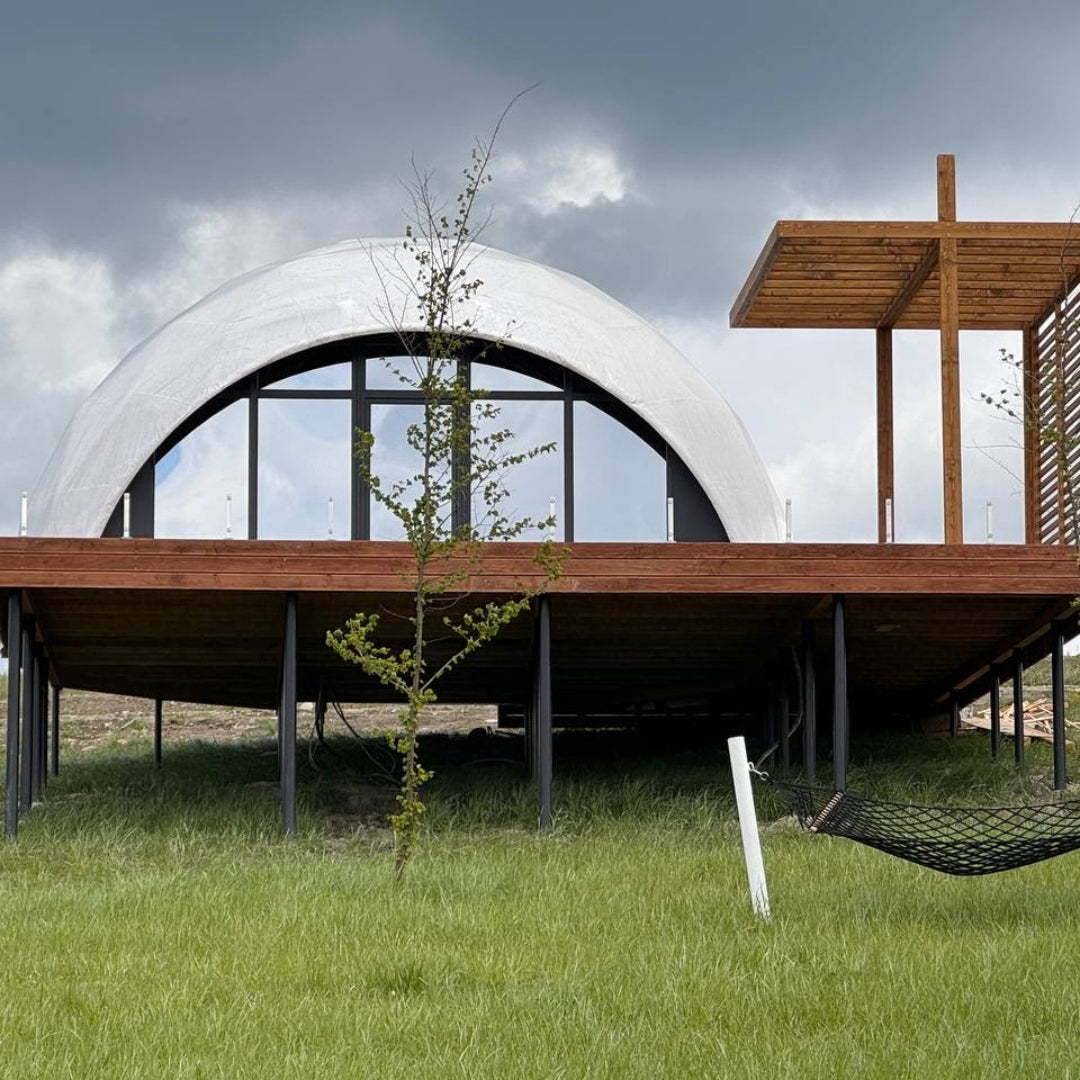
Good news first: a geodesic dome does not need a deep, complicated footing. It sits on one of two simple bases, a wooden deck or a concrete pad, and both work beautifully when they are sized correctly and drained well. That is the whole decision, and it is easier than most people expect.
The base you choose shapes cost, drainage, and how the finished dome feels to walk into, so it is worth deciding early with your contractor. Below is how to think about each option, so your money and your weekend both land in the right place.
Deck or concrete: choosing your dome foundation
Both a raised wooden deck and a poured concrete pad make a solid, permanent base for a dome. The difference is character, site fit, and how you want to use the space around it.
A round or multi-sided wooden deck is the versatile choice, and it truly shines on a slope. By cutting the support posts to different lengths, your builder lands a perfectly level platform on ground that rolls or falls away, which is exactly the kind of site that gives concrete trouble. A deck lifts the dome off the earth, sheds rain and snowmelt cleanly, and gives you that warm, cabin-like floor underfoot. Best of all, it does not have to stop at the dome's edge. Extend it into a wraparound and you have an outdoor room, space for chairs and a dining table, a lounge for morning coffee, even a hot tub under the stars. For a glamping rental, that extended deck often becomes the photo that books the stay. How to think about it: pick a deck for sloped or wooded land, and whenever you want the dome to open onto a proper outdoor experience.
A concrete pad is simple, flat, and about as permanent as it gets. On level ground it is often the most straightforward, budget-friendly route, because a poured slab on a flat lot is a clean, uncomplicated build. It sits the dome close to the earth, handles heavy interior fit-outs with ease, and pairs naturally with plumbing run through the floor for a kitchen or bathroom. How to think about it: pick concrete when your ground is already level, you want the dome low and grounded, and you would rather keep the base simple and economical.
So the honest rule of thumb: on flat ground, a concrete pad is usually the simpler, more economical base. On a slope, or when you want the dome to spill out into extendable living space, a wooden deck earns its keep. The right foundation is the one that matches your land and how you will live in the space.
Sizing and draining the base so it lasts
A dome anchors to its foundation with the included anchor kit, and the powder-coated steel frame spreads its load evenly around the ring, so the base carries weight in a friendly, predictable way. Two things make the difference between a base that lasts and one that gives you trouble: getting the dimensions right, and getting the water away.
Size comes first. The deck or pad should match the dome's footprint precisely, so the frame lands where it should and every anchor point has something solid beneath it. On uneven ground, a good builder levels the platform with a laser line and posts cut to height, which also opens up airflow and drainage underneath. Drainage comes next. A base that sheds water keeps the frame dry and the interior comfortable, which is why a raised deck or a lightly sloped, well-drained pad tends to age so well. Think of good drainage as insurance you buy once and enjoy for twenty years.
Here is where Harmony does something most makers leave you to sort out alone: we hand your contractor the base dimensions and foundation drawings before the dome ships, so the deck or pad is built to the right size and shape the first time. It is a small thing that prevents a big, common headache, and it means your dome and its base arrive ready for each other. If you want to see how the foundation fits into the bigger picture, our full geodesic dome cost guide breaks down where every dollar goes, foundation included. And if you are still choosing a model, the geodesic domes page lays out the sizes and footprints so you can plan the base around the right one.
Which foundation fits your build?
A backyard studio or seasonal getaway is happy on a modest deck or a small pad. A four-season dome you will live in or rent leans toward a base built for utilities and comfort, often a well-drained deck with room for hookups and an extended lounge, or a concrete pad with the plumbing already run. Tell us the site and how you will use the dome, and the right base follows naturally from there.
Whatever you choose, the goal is the same: a dome that sits level, stays dry, and feels solid the day it opens and the decade after.
Is a concrete pad or a wooden deck cheaper for a dome?
On level ground, a concrete pad is usually the more budget-friendly and simpler build, since pouring a flat slab is uncomplicated. A wooden deck often costs a little more, and it earns that back on sloped sites and when you extend it into outdoor living space. The cheaper base on paper is not always the better value for your site.
Can a geodesic dome sit directly on the ground?
For anything you plan to use, no. A dome needs a proper base, a wooden deck or a concrete pad, so it anchors securely and stays dry. Setting a dome straight on soil invites moisture and shifting, and it is the one shortcut worth skipping.
Do you need a concrete foundation for a geodesic dome?
Not necessarily. A well-built wooden deck is a fully valid foundation and often the more characterful, flexible choice, especially on a slope. Concrete is simple and permanent and pairs well with floor-run utilities, so the right answer depends on your land and how you will use the space.
Does Harmony help with the foundation?
Yes. We can provide the base dimensions and foundation illustrative drawings for your dome, so your contractor can build the deck or pad to the correct size and shape before the dome arrives. You get a base and a dome that fit each other from day one.
Ready to put a number on it?
Build and price your dome